

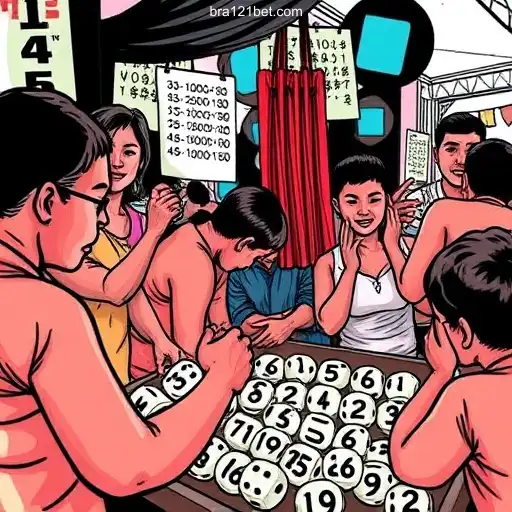

Jueteng is a controversial numbers game that has become deeply embedded in the cultural fabric of the Philippines. Despite its illegal status, the game flourishes, fueled by societal dynamics that intertwine with economic, political, and cultural factors. This article delves into Jueteng's intricate world, exploring its origins and the reasons behind its persistence amid legality issues.
Jueteng is a numbers game believed to have originated in China and introduced to the Philippines during the Spanish colonial era. The term ‘Jueteng’ is derived from two Chinese words: ‘hué’ (flower) and ‘teng’ (bet). It is primarily played using a pair of dice with the ultimate goal of guessing which number combination from a set of 37 will win.
The mechanics of Jueteng are relatively simple yet rely on a complex network of organizers and players. Bettors choose a set of numbers and place a bet on them, similar to a lottery. Draws occur multiple times daily, making it a dynamic and continuous gambling activity. The organization behind Jueteng is hierarchical, often led by a ‘cabo’ or a coordinator for a particular area, with a firm grip on the operations.
Jueteng is more than a mere game; it represents a microcosm of Philippine society. The game’s appeal largely stems from economic conditions where many individuals perceive it as a quick way to earn money, contrary to what legitimate lottery offers. Its deeply rooted presence in various Philippine communities reflects the socio-economic challenges faced by Filipinos.
Because Jueteng provides opportunities for underprivileged citizens to earn through betting or working as bet collectors, it inadvertently sustains livelihoods amidst poverty. This is where Jueteng’s true complexity lies: its illegal status does not diminish its economic importance in many local contexts.
Jueteng holds significant influence over political settings, often intertwining with political structures. It is widely acknowledged that many politicians have been implicated in Jueteng scandals, either by protecting its operations or benefitting financially from its proceeds.
This relationship signifies a conduit through which Jueteng operators exert influence and manipulate power dynamics. Political figures are sometimes accused of receiving "protection money" from Jueteng lords, which helps shield the operation from law enforcement.
The government has launched numerous campaigns over the years to eradicate Jueteng. While prohibited by Presidential Decree No. 1602, designed to penalize illegal gambling, enforcement remains challenging. Varied efforts by authorities, such as raids, arrests, and awareness campaigns, have proven difficult due to deep-seated corruption and Jueteng’s pervasive integration into local economies.
Legalizing Jueteng has been proposed several times, with gradual steps towards regulation to potentially lessen its negative impacts and harness its widespread popularity for public good. Among these efforts, some propose integrating such operations within the Philippine Charity Sweepstakes Office (PCSO) systems like "Small Town Lottery" to establish an auditable framework while collecting taxes and delivering communal benefits.
Jueteng has inevitably found its place in the digital age, with operators adapting to technological advancements. Despite the illegality, digital platforms have been used cautiously to conduct Jueteng operations, complicating efforts to curb them. However, the infiltration of technology has also brought opportunities for monitoring and gathering data on illegal betting activities to help eliminate or transform it towards the legal spectrum.
Further, the proliferation of online gaming platforms like "121bet Descubra o Melhor dos Jogos Online Brasileiros Hoje Mesmo♥️" highlights the transition of traditional gambling games into digitized forms. While these platforms aren't directly involved in Jueteng, their rise symbolizes a growing openness to diverse, digitally-native gambling modes, potentially influencing Jueteng’s structural transformation over time.
Jueteng stands as a testament to the vibrant, albeit controversial, cultural phenomena within the Philippine societies. Its operation transcends mere betting; it's a communal activity interwoven with daily life, showing resilience amid efforts to dismantle it. Local traditions and communal gatherings often circle around the anticipation of Jueteng results, demonstrating a symbiotic relationship between culture and gambling practices.
While Jueteng remains a taboo topic within formal circles due to its illegality, it persists as a subject of numerous literary and media projects illustrating the narratives of those intertwined with it. These narratives often highlight the dual nature of its impacts—both as a persistent societal problem and a necessary evil for economic sustenance.
In understanding Jueteng, its nuances reveal not merely an illegal numbers game but a complex societal mirror. It stands as a compelling example of how deeply traditional practices can embed themselves within the socio-economic and political weaves of a nation. While legitimate solutions seem distant, Jueteng's history and presence pose significant insights into the necessary balance between legality, culture, and economic realities.

MonkeyOfficeLegend: Dive into the enchanting world of online Brazilian games, blending excitement and strategy.

Explore the thrilling world of 'KingOfTheSky,' an engaging online game from Brazil that combines strategy with breathtaking aerial combat.

Unveiling the vibrant universe of GeishasRevenge, a captivating game in the realm of online Brazilian gaming.

Discover the allure of ImperialFruits5, a captivating online game offering an immersive experience with vibrant graphics and exciting gameplay features.

Dive into the exhilarating world of VolcanoRisingSE and uncover the best in Brazilian online gaming with 121bet.

Explore o mundo envolvente de GoldRush, um jogo emocionante da cena de jogos online do Brasil, com regras intrigantes e uma jogabilidade cativante.
